Counter

Search This Blog

Monday, April 26, 2010

Chapter Six Continued: A Question of Faith

A CULTURE OF DEFIANCE: History of the Reform-Conservative Party of Canada

When William Aberhart was still attending school, prior to getting his teacher's certificate, he fell out of a tree while picking apples, broke his leg, and was laid up at home until it mended.

During this time he may have studied the Bible intently, because it seems to be about then that his interest in religion took hold. He had attended Sunday School classes at the Presbyterian Church in Egmondville, but since he was adept at memory work, lacking reasoning skills, his knowledge was no doubt literal.

When he was finally able to return to his classes, he became alarmed at the religious program, which was following the social gospel, questioning the infallibility of the Bible.
While in my ... courses I had listened to the vaporing of modern theology. I heard them say that the first twelve chapters of Genesis was an allegory; that the story of the Flood was an Eastern Exaggeration, for the water had not covered the whole earth; that the crossing of the Red Sea was Eastern Imagery, and that it was the natural result of an East wind; that the yarn of Joshua and the Sun standing still was merely National legend, and not by any means scientifically accurate; that the story of Jonah and the whale was picturesque and figurative, and not meant to be taken in any literal fashion; that the first chapter of Matthew,
which describes the virgin birth, was unscientific and fanciful. I heard them say these things, and for a time I hardly knew where I was at. (1)

His faith wasn't put in question, so much as his memory of the Bible, which was how he defined his faith. This would have presented quite a dilemma for the young man, and began his disdain for liberal Christianity.

Brantford and a Spiritual Awakening

William arrived in Brantford at a time when the Niagara Bible Conferences had greatly impacted Church teachings. He joined the Zion Presbyterian Church, not long after they had lost their popular preacher, William Cochrane, who had stood at their pulpit since 1862. Cochrane had denied the new social gospel, maintaining that “Any toning down of such doctrines, is dishonorable in a Christian teacher, and deserving of severest condemnation.” (2)

The tradition continued and in 1902, the Church hosted their own Bible Conference, where the guest speakers were Elmer Harris and A.C. Dixon. Harris was the founder of the Toronto Bible College and would later be one of the consulting editors of the Scofield Reference Bible (1909). He was also the son John Harris, of the Massey-Harris company.

A.C. Dixon was a preacher at the Moody Church and regular attendant of the Niagara conferences. He was also the co-author a series of pamphlets defending conservative Christianity from the advances of modern theology, something that would have held a great sway with young William. The following year the speaker was Cyrus Scofield himself.

By this time, Aberhart was deeply involved with the dispensationalism that began with Reverend Edward Irving, who was considered a lunatic by his peers, and John Nelson Darby, whose writings on the seven dispensations, helped to form the basis of the Scofield Reference Bible. He also wrote a letter to his parents, berating them for not keeping the faith, that alienated him from his family.

A New Spiritual Mentor

There was another man who would have an effect on the direction of William Aberhart's future: Dr. William Nichol, who for eight years was the Sunday School Superintendent at the Zion Presbyterian Church.

Dr. Nichol had graduated from the school of homeopathy in Chicago in 1869, at a time when the famous evangelist, D.L. Moody was head of the YMCA, and was running an enormously successful Sunday School in the city. Nichol may have decided to follow in Moody's footsteps, because not only did he himself teach Sunday School and Bible classes, but he also became actively involved in the local YMCA, serving two terms as president. (3)

Nichol embraced dispensationalism and would eventually base his classes on the teachings of Cyrus Scofield. Young William was inspired and began teaching Bible classes himself, with his popular theme being the "Second coming of Christ." He continued to attend lectures by all of the top fundamentalists, and became especially enamoured with Dwight Lyman Moody. After seeing an ad for Scofield Bible studies, he sent away his $ 5.00 and completed the course at home. (4)

Besides teaching at the Zion Church he also ran classes at the YMCA and the Brantford Collegiate Institute. He then decided that he would like to become a preacher himself and enrolled in extramural studies at Queen's University, then a Presbyterian College:

His university education was rather unusual; he took his entire degree by correspondence, had no time for extensive research, and was never able to interact with his teachers and other students and thereby refine his thinking. That he was able to complete his degree at all shows a tremendous amount of ambition and initiative, for he had to carry his studies along with his duties as principal, husband, father, and lay preacher. Other than first-class honours in mathematics, his marks were very poor, reflecting the little time he was able to devote to his studies. He failed Greek twice, Hebrew once, and received only 35 per cent in Honours Political Science. He finally completed his B.A. degree in 1911. (5)

His theories were also becoming more erratic and not everyone saw a future preacher:

"He got in wrong with the ministers and officials of the Church because of his high-handed methods and his tendency to condemn all who were not of his opinion. Just prior to his departure for the West, there was increasing evidence of this intolerance." (4)

This would be the pattern of William Aberhart's life and the movement he created: Confrontation, Intolerance and erratic beliefs.

Chapter Six Continued: Jessie

Sources:

1. Bible Bill: A Biography of William Aberhart, By: David R. Elliot and Iris Miller, Edmonton: Reidmore Books, 1987, Pg. 8-9

2. William Cochrane, Dictionary of Canadian Biographies Online, University of Toronto

3. History of Brant County, City of Brantford, Biographical Sketches, Warner and Beers, 1883, Pg. 526

4. The Social Credit Movement in Alberta, By: John A. Irving, University of Toronto Press, 1959, pg. 12

5. Elliot/Miller, 1987, Pg. 16

Chapter Six Continued: Classrooms and Battlegrounds

A CULTURE OF DEFIANCE: History of the Reform-Conservative Party of Canada

After finishing his model school training, William Aberhart returned to academia to upgrade, eventually acquiring a professional certification, and in 1901 accepted a teaching position in Brantford, Ontario, at Central Public School.

Central was the pride of the city, first built in 1850, and officially opened by Egerton Ryerson. Over the next two decades, the school was enlarged, until a fired destroyed much of it 1890.

A new school was erected on the site*, with a central tower and modern facilities. Since William had taken a business course, it was here that he would begin his teaching career.

Or his religious career? His military career? Maybe all three.

The 'New' Model Army

Keep your faith in God, but keep your powder dry. Oliver Cromwell (1599-1658)

If Aberhart's teaching methods could be defined with one word it would be 'discipline'. Every report stressed that he was a strong disciplinarian who kept a tight control over his students. However, he didn't learn those skills in school, but rather from studying Oliver Cromwell. (1)

Cromwell is a well known historical figure, probably best noted for making England a republican Commonwealth; but he has also become an inspiration to many evangelicals, because of his New Model Army that combined military skills with religious fervour*.

Rather than choosing his military leaders from among the gentry, Cromwell instead chose them on their merits. Their religious merits. Strong believers like himself "... who knew that God was on their side;" the men would often sing psalms just before going into battle. Discipline was also strict and the training thorough, making them professional soldiers for Christ.


Aberhart's classroom operated much like an army camp. He assigned each of his students a three-digit number by which he addressed them rather than by name, and stamped their assignments with a rubber stamp that read "Checked by Wm. Aberhart." ... With recalcitrant students he had no patience; for slight misdemeanors he is said to have doled out strappings on Monday, Wednesday, and Friday, and for more serious offences he recom­mended suspension or expulsion. One former student claimed that Aberhart did everything he could to break the spirit of a child. (1)
In an essay he wrote himself he claimed that he viewed his classroom as a battlefield, and in choosing between individual creativity or group order, he chose order. The essay was riddled with military terminology. Students were not individuals but numbers, members of a group that needed to be controlled.

In 1905, the principal of Central School passed away, and William was named the interim principal, where he could put his 'military' training to better use. The following year he was given the job.

However, his religious calling took priority in his life, and would shape his future in ways that he could never have imagined.

Chapter Six Continued: A Question of Faith

Footnotes:

*The school burned down again in 1982, but when they were removing the rubble, they discovered that it had been built on a burial ground. Looking back at records, clearly showed that this was known, since it appeared on an 1830 survey, but apparently ignored.

** A US firm was inscribing Biblical passages into gun sights which were also being used by the Canadian military. When discovered, it created a storm of protest, and they had to be removed.Sources:

1. Bible Bill: A Biography of William Aberhart, By: David R. Elliot and Iris Miller, Edmonton: Reidmore Books, 1987, Pg. 15

Sunday, April 25, 2010

Chapter Five Continued: A Conspiracy Unfolds

A CULTURE OF DEFIANCE: History of the Reform-Conservative Party of Canada

Dwight Moody, who was more commonly known as D.L. Moody, was a very successful evangelical leader and regular attendee of the Niagara Bible Conferences.

His father died when he was young and his mother struggled to bring up seven children, eventually being forced to send several of them away. At the age of 17, Dwight moved to Boston to work in an uncle's shoe store, but the stipulation for employment was that he must go to church.

This set him on a career path that would span several decades, and he would found the Moody Church, the Northfield Mount Hermon School in Massachusetts, the Moody Bible Institute and Moody Publishers.

But before reaching that pinnacle of success, he spent many years in the trenches, ministering to the poor and less fortunate.

At the outbreak of the Civil War, Moody became involved with the U.S. Christian Commission of the YMCA, and would continue to build the organization after the war. In the spring of 1872, he travelled to England and Scotland, where he spoke to sold out crowds, and it was here that he came into contact with the Plymouth Brethren.

Henry Drummond

While touring Scotland in November of 1873, D.L. Moody was assisted by a fellow evangelist, named Henry Drummond, a member of that Plymouth Brethren.

Drummond's work was important because he combined scientific studies with scripture, which was just what they needed to help battle against the discoveries of Charles Lyall and Darwin.

But more importantly, Drummond was the son of the late Henry Drummond Sr. who himself had been an Irvingite. He had also worked closely with John Nelson Darby, and it is believed that he financed Darby's speaking engagements as he travelled throughout the United Stated and Europe, selling dispensationalism. (1)

Moody and Drummond would create a powerful team for the next leg of this spiritual journey.

Cyrus Scofield

Cyrus Ingerson Scofield was born on August 19, 1843 in Michigan. His mother died in childbirth and his father remarried. When the Civil War broke out, despite living in the North, Cyrus joined the Confederates. Not much is known about him until he shows up in St. Louis.

At the time, the city was the hub of the fur trade, run by the French, including many French-Canadians. This was when he met Leontine Cerre, whose family was from Montreal, and they were married on September 21, 1866. Since Leontine was a Roman Catholic and Cyrus was not, the wedding ceremony took place before a Justice of the Peace.

Meanwhile he was working for his brother-in-law, Sylvester Papin, who was president of the St. Louis Board of Assessors, where he trained to be a lawyer. It was here that he became familiar with grants, titles, deeds and conveyances. In 1869, he moved with his family, which now included two daughters, to Atchison Kansas, where they appeared to be living a pretty lavish lifestyle.

He was still involved in land claims, eventually going to work in the law office of John J. Ingalls, and it was Ingalls who sponsored Scofield's admission to to the Kansas bar.(2)

After getting elected to the state legislature, at a time when they appointed senators, Scofield managed to get his friend named to represent Kansas in the senate. Shortly after, Ingalls returned the favour by convincing President Grant to appoint Cyrus Scofield to the office of United States District Attorney for the district of Kansas.

However, it was soon learned that the new DA had been involved with some questionable land deals that included blackmail, so Cyrus resigned his position and fled to Canada, where there was no record of him for about three years. (3)

By 1877, he was back in St. Louis, making a living on swindles and schemes and writing bogus cheques. He was caught and thrown into prison.(2) However, after supposedly being "witnessed to" he became "born again" and emerged from jail (early) with a new religious calling. However, not everyone was convinced that this conman was on the level:
“Cyrus I. Scofield, formerly of Kansas, late lawyer, politician and shyster generally, has come to the surface again, and promises once more to gather round himself that halo of notoriety that has made him so prominent in the past. The last personal knowledge that Kansans have had of this peer among scalawags, was when about four years ago, after a series of forgeries and confidence games he left the state and a destitute family and took refuge in Canada. For a time he kept undercover, nothing being heard of him until within the past two years when he turned up in St. Louis, where he had a wealthy widowed sister living who has generally come to the front and squared up Cyrus’ little follies and foibles by paying good round sums of money. Within the past year, however, Cyrus committed a series of St. Louis forgeries that could not be settled so easily, and the erratic young gentleman was compelled to linger in the St. Louis jail for a period of six months.

“Among the many malicious acts that characterized his career, was one peculiarly atrocious that has come under our personal notice. Shortly after he left Kansas, leaving his wife and two children dependent upon the bounty of his wife’s mother, he wrote his wife that he could invest some $1,300 of her mother’s money, all she had, in a manner that would return big interest. After some correspondence he forwarded them a mortgage, signed and executed by one Chas. Best, purporting to convey valuable property in St. Louis. Upon this, the money was sent to him. Afterwards the mortgages were found to be base forgeries, no such person as Charles Best being in existence, and the property conveyed in the mortgage fictitious.” (4)

However, the new and improved Scofield was about to embark on the biggest con job in his illustrious career.

The Conspiracy

James H, Brooks, as I mentioned before, was the man who was behind the Niagara Bible Conferences. Brooks had met John Nelson Darby on one of his visits to the United States and had become a devout follower of his dispensationalist theories, and the doctrine developed by a Jesuit priest named Manuel de Lacunza.

In 1801, Lacunza had written a book, The Coming of the Messiah, under a Jewish pen name; Juan Josafat Ben-Ezra. Rev. Edward Irving had the book translated into English from the original Spanish in 1827, and this book became much of the foundation for his doctrine, that was followed by the 'Irvingites'.

Darby had actually used this work for his own preaching, giving credit to Lacunza, but was told that he would have to stop. If Brooks was going to be able to pull this off he couldn't include the Jesuits.

So at the Bible conference of 1877, Brooks introduced his new protegee to J.L Moody, a man with a lot of prestige in the evangelical community. Without knowing of his shady past, Moody named Scofield as secretary of his YMCA, and they would remain close, with Scofield even officiating at Moody's funeral.

But what did Brooks want with Scofield?

At the time there were several wealthy Jewish Americans, who wanted a place in the religious awakenings. Through Scofield's old friend, John Ingalls, himself Jewish, he was introduced to several of these money people, including Samuel Untermeyer, a prominent Jewish lawyer, whose clients included the Rothschilds, and oil baron Lyman Stewart, whose company later assumed the name Unicol.*

These are the people who put up the money for the Scofield Bible**, which became the basis for a Judea-Christian heritage, which is now referred to as Christian Zionism.

Eventually the Niagara Bible Conferences were cancelled due to lack of interest, mainly it was said because they had focused too much attention on dispensationalism and not enough on Christian fundamentalism.

I felt it was very important to spend a bit of time on the religious background of this movement, because William Aberhart embraced all of this, and it became the foundation of what I refer to as the Reform political movement, that culminated in the election of Stephen Harper and his newly created Conservative Party of Canada.

From a Scottish cult based on the writings of a Jesuit Priest, to the dispensationalism of John Nelson Darby, to the Christian fundamentalism created by the Niagara Bible Conference, and finally to the creation of Christian Zionism by a conman named Cyrus Scofield.

And just as these high profile evangelical leaders got together to dispute scientific claims, so too does our current government. Our Science Minister, Gary Goodyear, is a creationist. I think that says it all.

Chapter Six: William of Tuckersmith

Footnotes:

* Hamid Karzai, the president of Afghanistan, is a former employee of Unicol. According to Eric Walberg of Middle East on-line, "... Karzai himself was a member of the Taliban government from 1995-98, before Unicol hired him as an insider to try to clinch an oil pipeline deal." Many people believe the War in Afghanistan is really about those pipelines.


** The Scofield Bible would be the inspiration for evangelist Tim LaHaye's immensely popular Left behind series. LaHaye was the man behind the formation of the Moral Majority/Religious Right movement in the United States. LaHaye was also one of the founders of the Council for National Policy, where Stephen Harper gave his 1997 speech that surfaced during an election campaign, and many believe saved Canada from a Harper majority in 2006.

Sources:

1. The Life and Work of Prof. Henry Drummond, by Rev Finlay Stewart

2. Dancing Around the Golden Calf, By: John S. Torell, European American Evangelistic Crusades, The Flaming Sword, January-March 2007


3. The Incredible Scofield and His Book, By: Joseph Canfield, Ross House Books, 1988

4. Cyrus I. Scofield in the role of a Congregational Minister, The Daily Capital, Topeka, Kansas, August 27, 1881

Chapter Five Continued: The Irvingites and Dispensationalism

A CULTURE OF DEFIANCE: History of the Reform-Conservative Party of Canada

Oh! it is needed, much needed at present, a leading back to the cross. I saw that night, and often since, that there will be an outpouring of the Spirit on the body, such as has not been, a baptism of fire, that all the dross may be put away. Oh there must and will be such an indwelling of the living God as has not been—the servants of God sealed in their foreheads—great conformity to Jesus—his holy holy image seen in his people.
Margaret MacDonald Visionary (1)

The notion of the Rapture and an Antichrist, has been around for centuries, but it first gained prominence in the modern world, due to the efforts of a Scottish theologian by the name of Edward Irving.

Irving was a scholar whose circles would be other scholars and members of the upper class. However, when he first put his theories to the test, they were mostly scoffed at by his peers. As a result, he was lampooned in Christian journals and dismissed as being a lunatic.

So instead Irving found his disciples amongst the poor and down trodden, who would come to be known as Irvingites. To many then and now, this was really a cult, that engaged in questionable rituals, which included speaking in tongues.

But one family that enjoyed these orgasmic liturgies, were the MacDonalds of Port Glasgow, Scotland; and apparently during one of their ceremonies in 1830, 15 year-old Margaret MacDonald had a vision of the Rapture. She wrote everything down in a lengthy dissertation, or relayed it and someone else wrote it down, which was delivered to leading members of the clergy. The quote above was part of it.

Now I'm not trying to question a person's religious beliefs, but am just trying to provide a history of this movement. However, I question this story, simply because it's highly unlikely that Miss MacDonald could have created such a scholarly account. I think that it was probably written by Irving, and distributed to the religious hierarchy, in an attempt to validate his claims. I've no doubt that she had a vision, but it was probably inspired by notions already planted by the good Reverend.

In 2000, when Stockwell Day was running as leader of the Alliance Party, to oust then Prime Minister Jean Chretien, journalist and author Gordon Laird investigated Day's past, in particular his days spent in Bentley Alberta as a lay preacher (Day has had no formal training and in fact holds only a high school diploma). Laird interviewed the man who took over from Day when he left to run for political office in the provincial legislature.

Gregory Rathjen says that when Day left in 1985 to pursue a political career, the assistant pastor left behind a community that was deeply divided. Rathjen arrived in 1986 to a disaster: a demoralized congregation had shrunk almost by half, allegations of fraud were afoot, and the church owed $12,000 to creditors.

Factions were warring. It was a dark time in Bentley. "The church leaders had risen to unquestioned authority," explains Rathjen. "They had moved away from the congregational government with the assumption "You're here to serve and not ask questions." Rathjen reports that, before its collapse, the former Bentley Christian Centre was a renegade Pentecostal church that instituted a divine mandate to replace grassroots congregational representation.

Throughout this period, Stockwell Day was assistant pastor and school administrator. "They changed their by-laws so that the people would have no say - leaders to be appointed by other leaders, as determined by scripture," explains Rathjen. "It was a haughty, arrogant, pride-filled success story that led to disaster." Fuelled by American-style revivalism, the church emphasized radical gospel practices - such as speaking-in-tongues - that whipped worshippers into a frenzy. "They have emotional experiences and then try to build a doctrine around it," explains Rathjen. The intensity of the church and constant stream of visiting American pastors gave Bentley an international profile within fundamentalist circles. But the church eventually succumbed to its own extremes. "I would say that it was as close to a cult as you can get," says pastor Rathjen. (2)


This sounds very much like the rituals created by Reverend Irving.

John Nelson Darby

One of the religious leaders who may have received a copy of Mary MacDonald's dissertation, was John Nelson Darby, a kind of renegade Irish-Anglican evangelical, who came to represent the Plymouth Brethren. He is also credited with being the father of modern day dispensationalism.

The story, or at least one of them, is that Darby visited with MacDonald and immediately inserted her visions into his dispensationalist theories.

However, I don't believe that was done until later, inserted for other reasons, which I will describe later.

What is known is that Darby fell off his horse about 1830, and while recovering, began to study the Book of Revelations in earnest, and from them created his dispensations.

There are seven of them, the first being Adam and Eve and the Garden of Eden. This is followed by Noah and the flood, Abraham, Israelites, Gentiles, the Holy Spirit and the Millennium. The first six ended in failure.

However, according to author C.H. Fisher, and several others, Darby did not incorporate his new rapture theories into his text. In the December 1830 issue of "The Christian Herald, he was still supporting the ancient tradition, and continued to do so until 1839. "Later on in the nineteenth century Darby incorporated the idea of the any-moment secret into a last-days scheme which has come to be known as Dispensationalism." (3)

And indeed it was a scheme.

Chapter Five Continued: A Conspiracy Unfolds

Sources:

1. The incredible cover-up : the true story on the pre-trib rapture, By: Dave MacPherson, Logos International, 1975, ISBN: 978-0931608063, Pg. 162

2. Bentley, Alberta: Hellfire, Neo-Nazis and Stockwell Day, By: Gordon Laird, 2000

3. Pretribulation Rapture: What if it Isn't True?, By: C. H. Fisher, Chapter Four


Saturday, April 24, 2010

Chapter Five: Spiritual Awakenings

A CULTURE OF DEFIANCE: History of the Reform-Conservative Party of Canada

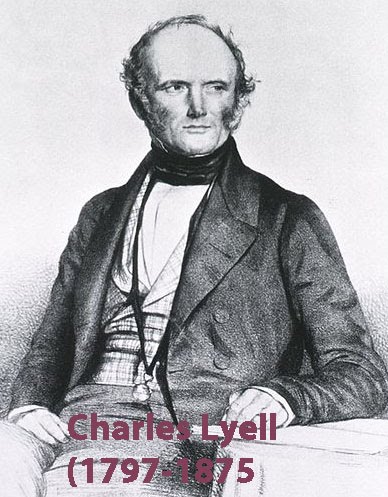
In October of 1841, a British lawyer and geologist, Charles Lyall, visited Niagara Falls in Canada to study rock erosion, and determined that the Niagara Gorge was about 35,000 years old, much older than the Young Earth Creationists had estimated, or at least had made fit Biblical history.

This study was only one of many done by Lyall, in his determination that the earth had been shaped by ‘slow and gradual’ processes over countless millions of years.

Lyall's studies were also brought to the attention of another scientist, by the name of Charles Darwin, and he carried with him a text by the geologist, which he read on his famous voyage of the HMS Beagle.

In 1859, Darwin's On the Origin of Species was published, complementing Lyell’s arguments, but further alarming others who still supported the infallibility of the Old Testament. Not only was the chronology of the ancient script now being questioned, but the story of Adam and Eve, and the lineages that had been created from the first coupling.

Meanwhile, a liberal Christian movement had emerged, that attempted to accommodate the new scientific discoveries. They did not question that God existed, but instead of simply memorizing text, they sought to understand the message that the text was trying to convey, and how they could relate that to a modern world. As such, students of liberal Christianity were encouraged to challenge the scriptures, and seek meaning. (1)

Naturally this upset many Protestant evangelicals, who were not prepared to challenge a single word of what was written centuries ago. So instead they challenged the scientists.

And the fact that Lyall would later alter his findings at the Niagara Gorge, was all the proof they needed that everything he wrote was a fraud, and by association, Charles Darwin as well.

Of course, these evangelicals had the advantage, because they didn't have to prove their assertions. The fact that they were written was all the proof they needed.

So in 1876, a well-known Bible teacher and Christian author, James H. Brookes, organized the "Believers' Meeting for Bible Study", where they discussed the best way to deal with the new threats imposed by science and the "liberal morality", which was even being adopted by many forward thinking evangelicals.

In 1878, they produced a document that came to be known as the "Niagara Creed" and from that, Christian fundamentalism was born.

The main points of the creed were:

1. We believe "that all Scripture is given by inspiration of God," by which we understand the whole of the book called the Bible ...

2. We believe that the Godhead eternally exists in three persons, the Father, the Son, and the Holy Spirit ...

3. We believe that man, originally created in the image and after the likeness of God, fell from his high and holy estate by eating the forbidden fruit ...

4. We believe that his spiritual death, or total corruption of human nature, has been transmitted to the entire race of man, the man Christ Jesus alone excepted; and hence that every child of Adam is born into the world with a nature which not only possesses no spark of Divine life, but is essentially and unchangeably bad ...

5. We believe that owing to this universal depravity and death in sin, no one can enter the kingdom of God unless born again ...

6. We believe that our redemption has been accomplished solely by the blood of our Lord Jesus Christ, who was made to be sin, and made a curse, for us, dying in our room and stead ...

7. We believe that Christ, in the fullness of the blessings He has secured by His obedience unto death, is received by faith alone, and that the moment we trust in Him as our Savior we pass out of death into everlasting life ...

8. We believe that it is the privilege, not only of some, but of all who are born again by the Spirit through faith in Christ as revealed in the Scriptures, to be assured of their salvation ...

9. We believe that all the Scriptures from first to last center about our Lord Jesus Christ, in His person and work, in His first and second coming; and hence that no chapter even of the Old Testament is properly read or understood until it leads to Him ...

10. We believe that the Church is composed of all who are united by the Holy Spirit to the risen and ascended Son of God ...

11. We believe that the Holy Spirit, not as an influence, but as a Divine Person, the
source and power of all acceptable worship and service ...


12. We believe that we are called with a holy calling to walk, not after the flesh, but after the Spirit, and so to live in the Spirit that we should not fulfill the lusts of the flesh ...

13. We believe that the souls of those who have trusted in the Lord Jesus Christ for salvation do at death immediately pass into His presence, and there remain in conscious bless until the resurrection of the body at His coming ...

14. We believe that the world will not be converted during the present dispensation, but is fast ripening for judgment ... (2)

These 14 points were absolute and there would be no debate, though there would be a little tweaking.

From 1883, their meetings were held at Niagara-on-the-Lake, Ontario, in the Queen's Royal Hotel, and would continue being held there, with the exception of 1884, until the conferences were discontinued in 1897.

Chapter Five Continued: Irvingites and Dispensationalism

Sources:

1. The Christocentric Liberal Tradition, The Roots of the Christocentric Liberal Tradition, By: Terry Matthews, Lesson 7


2. In Pursuit of Purity: American Fundamentalism Since 1850, by David O. Beale ISBN 0-89084-351-1

Chapter Six: William of Tuckersmith

A CULTURE OF DEFIANCE: History of the Reform-Conservative Party of Canada

William Aberhart Jr. was born on December 30, 1878 (1), in Hibbert Township, Perth County, Ontario; the fourth child and third son of William Sr. and Louisa (Gourica) Pepper. His family owned a rather large and prosperous wheat farm, and were not terribly sociable, so Williams' early years would be spent there with siblings.

He first attended school at Hibbert #7, a one room schoolhouse, but at the age of eight, the family moved closer to town so that their eldest children would have an opportunity to attend high school. The remainder of William's elementary school days would be spent in Egmondville.

By this time, the town had a gunsmith, cobbler, weavers, blacksmiths, a woolen mill, tanneries, several general stores, a cider mill, at least five hotels, a brewery, ashery, pottery, sawmills, gristmills, a brick and tile yard, cabinet makers and an undertaker, a German Lutheran as well as Presbyterian Church, a schoolhouse of course and a post office.(3)

His paternal grandparents were both deceased, though their history was woven into the tapestry of that small town.

The Aberhart home (shown above)was a white, two-story farmhouse, covered with clapboard siding, standing on an open rise of land, with a picturesque view from all directions.
The house had a spiral staircase to the second floor, and the parlour boasted a piano and fine furniture. Out behind the house were farm buildings later shaded by the large deciduous trees that the boys planted. A stream flowing through the back of the property provided a ready supply of fish and a source of water for the livestock. A new piggery that William Sr. had constructed along the latest scientific principles, and which was described as a ''palatial mansion,'' was the talk of the community and earned him a reputation as a progressive farmer." (2)
A normal day for William would be up at 4 or 5 to milk the cows and then deliver the milk before going to school, then another delivery in the evening.

His father was stern, though it is said that his mother was the disciplinarian. She was not affectionate with the children, but pushed them to succeed, and stressed the importance of education.

William was only an average student though he excelled at mathematics and penmanship, and had an almost photographic memory, but few reasoning skills. He also enjoyed music and taught himself to play several musical instruments.

Children he went to school with claimed that he did not really get along well with other students, so had no real friends.

He later attended Seaforth high school, where he earned a reputation as a top athlete, and was nicknamed "Whitey" because of his light hair colour. From there he enrolled in a model* school and obtained a third class certificate allowing him to teach elementary classes.

He thought he had found his calling.

*Model Schools were established to train young people how to teach. The quality of instruction was poor, but there was a great demand at the time for teachers, especially in rural areas, so it was really the best they could do. I think the focus was on discipline and maintaining control of a classroom.
Sources:
1. Registrations of Births and Stillbirths – 1869-1909. MS 929-40, Toronto, Ontario, Canada: Archives of Ontario.

2. Bible Bill: A Biography of William Aberhart, By: David R. Elliot and Iris Miller, Edmonton: Reidmore Books, 1987, Pg. 3

3. Egmondville and Van Egmond House, Heritage of Huron East, Virtual

Friday, April 23, 2010

A Culture of Defiance: Introduction

A CULTURE OF DEFIANCE: History of the Reform-Conservative Party of Canada

In 1997, Stephen Joseph Harper, our current, at least current to my writing this, Prime Minister; was asked to give a speech on the Canadian political system, to the Council for National Policy, a secretive American lobby group, who were meeting in Montreal. CNP is an influential right-wing organization founded by Tim LaHaye and James Dobson, and in many ways are the military arm of the Religious Right in the United States.

Tim Lahaye is the co-author, along with Jerry B. Jenkins, of an enormously successful series of books, called Left Behind. These books have formed the foundation of Christians United for Israel, a religious group pushing for the annihilation of Muslims in the Middle East, as a step on their road to Armageddon. CUFI's founder John Hagee, calls it "God's Foreign Policy".

Their Canadian head is Charles McVety, a man who has a lot of clout with our current government and enjoys not only ready access to people like Jason Kenney (Immigration), Stockwell Day (Treasury) and Jim Flaherty (Finance), but also Stephen Harper himself.

James Dobson is the founder of Focus on the Family, an anti-abortion, anti-gay rights, anti-public school, organization; that includes several of Harper's MPs; like Maurice Vellacott, Rob Anders, and Brad Trost. The Canadian founder of Focus on the Family, Darrel Reid, is now Harper's deputy chief of staff.

Dobson assisted in Harper's political success by running a series of radio ads in Canadian cities against same-sex marriage; an issue that Harper then adopted as part of his reaching out to the social conservatives.


When that 1997 speech first surfaced during the 2005-2006 federal election, it raised a lot of red flags, once again adding fuel to the fear of Stephen Harper's "Hidden Agenda".

Many quotes were pulled from it, and the Liberal campaign included bits and pieces. It is believed that it actually cost the Reform-Conservatives a majority government.

But I've read that speech several times, and what I get from it is arrogance. An arrogance that implies that we are all wrong, but we're too ignorant to even know that we are all wrong. That only he can see the error of our ways.

Now, having given you a compliment, let me also give you an insult. I was asked to speak about Canadian politics. It may not be true, but it's legendary that if you're like all Americans, you know almost nothing except for your own country. Which makes you probably knowledgeable about one more country than most Canadians.

What was the point of that remark? He's speaking to Americans, about Canadians.

First, facts about Canada. Canada is a Northern European welfare state in the worst sense of the term, and very proud of it. Canadians make no connection between the fact that they are a Northern European welfare state and the fact that we have very low economic growth, a standard of living substantially lower than yours, a massive brain drain of young professionals to your country, and double the unemployment rate of the United States.

In terms of the unemployed, of which we have over a million-and-a-half, don't feel particularly bad for many of these people. They don't feel bad about it themselves, as long as they're receiving generous social assistance and unemployment insurance. (1)

It's almost like an attack ad. Very much the way he acts in Parliament now against his political opponents, only in this case, it was against the Canadian people.

It wasn't a clever speech. There were no great pearls of wisdom. It was flip and if he was actually trying to educate this group on Canadian politics, it would have only created confusion. He talks about 'Whigs' without explaining who they were. States that most Catholics vote Liberal for 'reasons he didn't want to get into.' Why bring it up at all if he wasn't going to qualify it?

We do get a glimpse into his ideology when he refers to women's rights as 'feminist' rights, and "... including some that would just horrify you, putting universal Medicare in our constitution.." What is so horrifying about universal Medicare?

If I were in the audience, I definitely would never have got the impression that this was a man with political aspirations. If he wrote that speech it was grade eight at best.

"...and a whole bunch of fairly non-conservative economic things."

" ... and a whole bunch of other things"


But I think that it helps to define this movement. It has always been about protest and arrogance and ignorance. They adhere to the Old Testament and have a view of Canada as being in moral decay. They want to return to the "good old days" when women knew their place and there was prayer in school, and a sea of white faces.

In it's seventy-five year history, there have only ever really been five leaders: William Aberhart, Ernest Manning, his son Preston Manning, Stockwell Day and Stephen Harper, and their political views have not progressed but stagnated.

Their arrogance is born of ignorance. And rather than try to raise the level of debate, they want to bring it down to their level. Experts in their field are "elites", well-educated are reduced to "university types", advocates are "fringe-groups".

There is no desire to move Canada forward only dismantle it and strip it down. Isolate us from our former allies with high-handed foreign policy, and a refusal to co-operate. Base our laws on the Bible and our future on Biblical prophesy.

They have made Canadian politics so toxic that our very democracy is at risk. Secrecy is the order of the day and their media control is alarming.

This is a movement that was founded on anti-Semitism, nurtured on racism, and fueled by extremism. And every time a party they create is exposed, they simply re-invent themselves, but using the same old worn out parts. Social Credit - Reform - Alliance - Conservative. The only thing that really changes is the name.

And what will their legacy be? Will we even recognize this country when they're through? Can their damage be repaired?

People who once lived on the fringe, are now in control and they have aligned themselves with the most extreme elements, here and in the United States. It's frightening really, but it shows what happens when you don't pay attention.

Hopefully, you'll pay attention now.

Chapter One: Bold Moves

Sources:

1. Full text of Stephen Harper's 1997 speech, Canadian Press, December 14, 2005