Counter

Search This Blog

Showing posts with label Populism. Show all posts

Monday, November 1, 2010

Redefining Populism as a Political Alternative

A CULTURE OF DEFIANCE: History of the Reform-Conservative Party of Canada
"My personal political convictions are rooted in the populist political traditions of western Canada." - Preston Manning
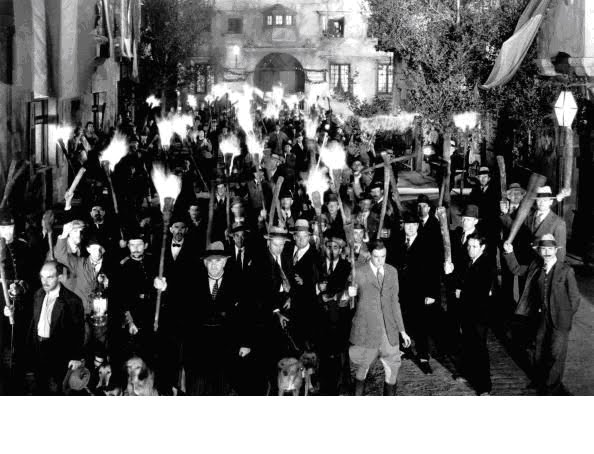
Populism can be described as a reactionary political expression, often rooted in a sense of persecution.

It can be "irrational, regressive, anti-intellectual and paranoid" (1) which in many ways describes the new American Tea party gang.

Populist movements are neither exclusively right nor left, as they can manifest themselves into fascism, Marxism, communism or democracy. Any movement driven by the masses.

But what is interesting about Reform movement populism, is that it was not bottom up, but top down. It was hatched and contrived by an "elite" group of four individuals: the multi-millionaire Francis Winspear. President of the Canada West Foundation, which was created to address Western grievances, Stan Roberts. Son of the former premier of Alberta, Preston Manning. And the controversial right-wing Canadian journalist, publisher and editor, Ted Byfield.

And the party did not emerge, as many believe, in protest over the National Energy Policy or Mulroney's decision to grant Montreal the maintenance contract for CF-18 fighter jets, instead of Manitoba, as he'd promised.

They were only necessary tools to further inflame western grievances.

The idea for this party originated in the 1960's when Ernest and Preston Manning wrote a little book called Political Realignment, which was a plan to reinvent Canadian conservatism, and move it sharply to the right. The concept for the National Citizens Coalition actually came from that book.

But the Mannings knew that they would have to wait until the next wave of white hot anger before they could act.

By the People But Not For the People

When Preston Manning began organizing the Reform movement, he studied the success of the Social Credit Party that enjoyed an enormous victory in 1935, and ruled Alberta for decades. But while William Aberhart could be said to be left wing, wanting to help those who were so poor "in the midst of plenty", Ernest Manning abandoned those notions, as he instead adopted neoconservative principles.
In 1943, premier William Aberhart died and was succeeded by a devout follower, Ernest Manning, who even more fervently preached a linkage between religious fundamentalism and right-wing free enterprise. The oil boom, which occurred shortly thereafter, further reinforced the political acceptability of Manning's ideology. Moreover, the boom also brought the considerable influence of the largely American-owned oil and gas industry to bear upon Alberta's political culture. Nowhere was this more the case than in Calgary.

The relatively few Americans who came to Alberta in the postwar era had a notable social and political impact. In the early years of the boom, a majority of the senior management of the major oil companies ... were from California, Oklahoma, Texas, and Louisiana. From 1955 to 1970, nine of the fifteen presidents of Calgary's exclusive Petroleum club were Americans.... Like their counterparts in the United States, they often held strong right-wing views." In short, the American-owned oil and gas industry held considerable influence in Calgary. (2)
And the American-owned oil and gas industry still have a considerable influence in this country, under the movement's new name: The Conservative Party of Canada, led by Preston Manning's former lieutenant, one Stephen Harper.

Sources:

1. Of Passionate Intensity: Right-Wing Populism and the Reform Party of Canada. By Trevor Harrison Toronto: University of Toronto Press, 1995. ISBN: 0-8020-7204-6, Pg. 7

2. Harrison, 1995, Pg. 29-30

Redefining Populism as a Matter of Convenience

A CULTURE OF DEFIANCE: History of the Reform-Conservative Party of Canada

When Trevor Harrison wrote Of Passionate Intensity: Right-Wing Populism and the Reform Party of Canada, in 1995; the party had already achieved it's first real electoral success. It was also creating a great deal of concern among Canada's traditional ruling class.

Bursting onto the scene at the same time as another populist movement turned party, the Bloc Québécois; the political landscape of Canada was about to change dramatically.

And not for the better.

Was the Reform Party Really Populist?

Harrison starts out by examining the party from a populist perspective. But was it really a populist party? It had many elements of populism.
A belief system forged out of the conjunction of nationalism with ethno-cultural, religious, and/or racial prejudice." Nativist attitudes are most likely held by people in social groups that have the same racial, ethnic, and/or religious characteristics as the dominant class, but not the economic or political power. (1)
There's no argument that the party saw themselves as the voice of the white English speaking population, who opposed what they felt was forced multiculturalism and of course bilingualism, and concessions to Quebec. They saw themselves as being in the majority and yet the minority in terms of representation.
Such attitudes emerge most frequently during periods of social, political, or economic crisis, the latter form of crisis suggesting that nativism also may be linked to a feeling of 'relative deprivation."' However caused, the crisis nonetheless results in the emergence of a sense of 'calling' among the heretofore-identified social groups to defend the country against perceived internal threats posed by various minority groups." (1)
The most common complaints at the early conventions included turbans in the RCMP, destabilizing immigration, and government funding to "radical feminist" and homosexual groups. They saw moral decay and a threat to their way of life. Ward Cleaver was being recast.
An essential feature of populist movements is their mass-organizational nature, a view elaborated upon by others who have stated that the core notion underlying populism is that of 'a people' defined by its historic, geographic, and/or cultural roots.' Perhaps the clearest definition of populism, however, is provided by Peter Sinclair.' According to Sinclair, a populist movement frequently 'stresses the worth of the common people and advocates their political supremacy,' rejects 'intermediate associations between the mass and leaders,' and directs its protests 'against some group which lies outside the local society.'
The Reform Party had all the elements of a populist party but there was a big difference.

Reform Party populism was contrived.

It was not about a popular person championing a cause and garnering followers to that cause. Nor was it about common people being led by one of their own. This was a deliberate intent to incite anger, and to turn that anger into political success.

And the ultimate goal was to create a new ruling "elite", drawn from the corporate world, who would manipulate the common people into believing that they were in fact, the ones calling the shots.

In Lawrence Martin's book of former Bloc leader, Lucien Bouchard; The Antagonist, he refers to him as probably "the greatest threat to unity Canada has ever known", and suggests that Bouchard is a complex man, who "spends most of the time trying to keep his aggressiveness in check." (2)

In Martin's new book Harperland, he paints a similar picture of Stephen Harper.

Bouchard was a threat to unity, while Harper is a threat to democracy. Both men dangerous. Both volatile and driven.

The only difference between them is that Bouchard's agenda was always known. We're still unravelling Harper's.

Continuation:

Redefining Populism as a Political Alternative

Redefining Populism and the Creation of Social Conservatism

Redefining Populism as a Corporate Mind Game

Redefining Populism: Think Tanks, Foundations and Institutes, Oh My!

Redefining Populism and a Battle for Religion

Redefining Populism as Fraser Institute Drafts Policy

Redefining Populism and The Canada West Foundation

A Just Society: Oil, Americans and Mythology

The Patriot Game: Western Separation

Sources:

1. Of Passionate Intensity: Right-Wing Populism and the Reform Party of Canada, By Trevor Harrison, University of Toronto Press, 1995, ISBN: 0-8020-7204-6 3 7, Pg. 5-7

2. The Antagonist: Lucien Bouchard and the Politics of Delusion, By Lawrence Martin, Viking Press, 1997, ISBN: 0-670-87437-X, Pg. VII